
“Bear one another’s burdens, and in this way you will fulfill the law of Christ” (6:2).
What it means to live by democratic principles in challenging times
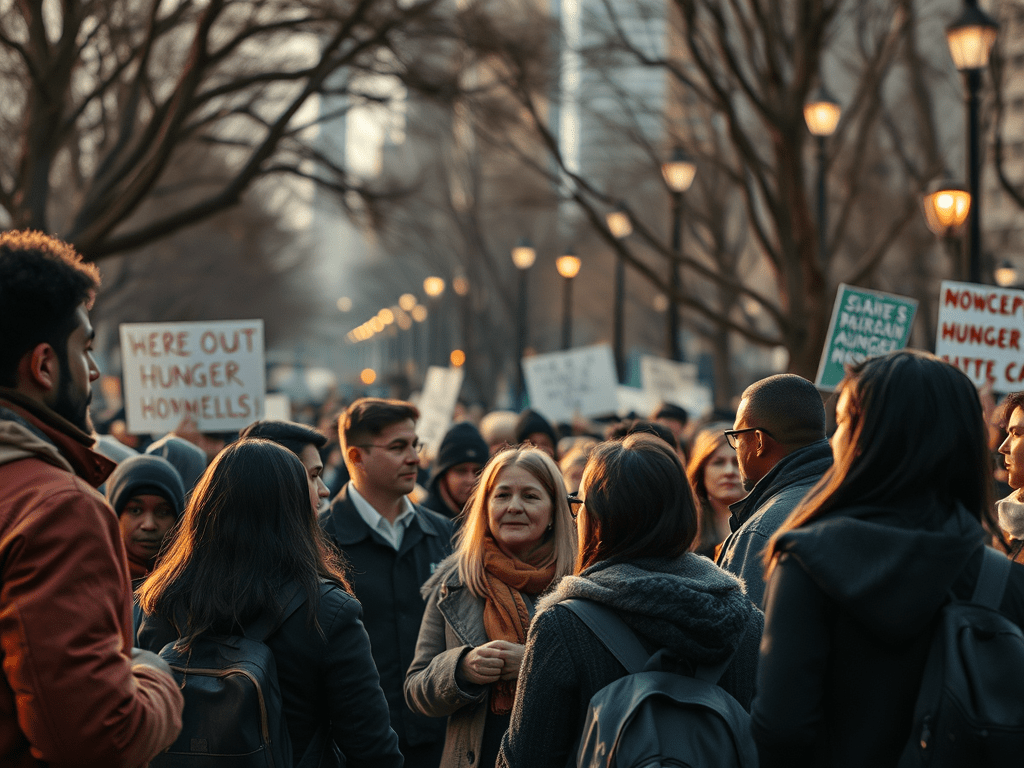
The world is engulfed in turmoil. Many individuals are facing homelessness and hunger. We must each think deeply on our beliefs. It’s a moral imperative to examine the principles that guide our lives. The urgency of this moment calls us to reconsider our political and religious convictions. These are not merely abstract notions. They serve as the foundation of societal standards and collective responsibility.
What Does Democracy Mean to Us?
Democracy, for many, is synonymous with freedom, equality, and justice. It is a system that promises a voice for all, where governance is shaped by the will of the people. Yet, beyond its theoretical definitions, democracy is a lived experience that varies greatly across nations and cultures. For some, it signifies the hard-won triumph over oppression. For others, it is the fragile framework within which aspirations for a better life take root.
First, we must decide what democracy means to us. We need to ask how it influences the lives of the most vulnerable. Does it guarantee dignity for the homeless? Does it offer hope to the hungry? Democracy, in its truest form, should not merely be an institutional arrangement. It should be a way of life that seeks to uplift every individual. It must make sure that no one is left behind. Reflecting on its meaning pushes us to hold ourselves accountable for the well-being of our communities.
The History of Democracy: A Guiding Light
The origins of democracy go back to ancient Greece. Citizens of Athens gathered there to debate and vote on matters of communal importance. But, the Athenian model was limited, confined to a privileged few. Over centuries, democracy evolved, shaped by revolutions, struggles for independence, and the relentless pursuit of equality. Important documents marked milestones in its journey. These include the Magna Carta, the Declaration of Independence, and the Universal Declaration of Human Rights.
Yet, history reminds us that democracy is not a static achievement but an ongoing process. It thrives on active participation and vigilance, and it falters in the face of apathy. Each era of crisis, like the one we face today, challenges us to protect and strengthen democratic ideals. By revisiting its history, we gain both perspective and inspiration to act as stewards of this precious system.
The Intersection of Religious Beliefs and Democratic Values
Religious beliefs have long played a role in shaping ethical foundations that resonate with democratic principles. Concepts of justice, compassion, and human dignity, central to many faith traditions, align closely with the ideals of democracy. The Golden Rule illustrates this concept. It emphasizes treating others as one wishes to be treated. This embodies a spirit of mutual respect vital to a functioning democracy.
Nonetheless, the question arises: Are there specific religious beliefs essential to the democratic way of life? Democracy does not need adherence to any particular faith. Nevertheless, it thrives in environments where moral principles support inclusivity. It also thrives where equality exists. It is not the exclusivity of a religious doctrine but the universality of its ethical teachings that strengthens democracy. The challenge lies in ensuring that religious beliefs do not become tools for division. Instead, they should be sources of unity and shared purpose.
Reaffirming Our Commitments
As members of a community, believers are called to bear one another’s burdens. They should look beyond their own interests to those of others. Galatians 6:2 urges us to “carry each other’s burdens,” reflecting the essence of shared responsibility. Philippians 2:4 encourages us to focus not only on our own interests. We should also consider the interests of others. This will foster a spirit of mutual care. Galatians 5:13 emphasizes that we should serve one another humbly in love. Hebrews 10:24 encourages us to spur one another towards love and good deeds. 1 Thessalonians 5:14 exhorts believers to help the weak. It also urges us to be patient with everyone. By embodying these principles, communities can thrive through collective support, compassion, and encouragement.
In these turbulent times, it behooves us to look inward and question the standards by which we live. Are our political systems truly serving the people? Do our religious convictions inspire us to act justly and compassionately? Democracy is more than a political system; it is a reflection of collective values. Likewise, religion, at its best, provides a moral compass that guides us toward empathy and altruism.
To tackle the homelessness, hunger, and despair that plague so many, we must recommit to principles of shared responsibility. We also need active participation. Democracy calls us not only to vote. It asks us to engage and debate. It urges us to build a society that reflects the highest ideals of humanity.
Conclusion
Democracy and belief systems are deeply intertwined. Both political and religious aspects have the capacity to shape the world we live in. As we navigate crises that test our resilience and compassion, let us redefine democracy not as a static ideal. Instead, view it as a living, breathing entity. It requires constant nurturing through our actions, beliefs, and collective will. By clarifying our standards, we can reaffirm our commitments. This will guarantee that democracy remains a beacon of hope. It acts as a force for good in a world in turmoil.
I pray that your journey be blessed with wisdom and grace.
Blessings,
Minister A. Francine Green
 afrancinegreen.com