
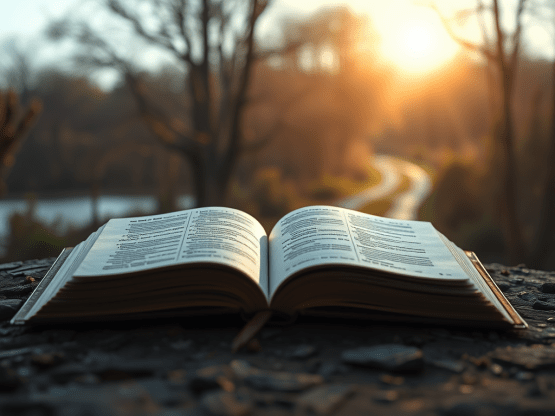
What the Bible Says About Sin and Its Meaning
The Bible provides a clear and detailed explanation of sin. It presents sin not just as something people do wrong. It is also a deeper issue that affects every human being. Let’s explore this concept in plain language so that anyone can understand the key ideas.
What Is Sin?
Sin, according to the Bible, is essentially disobedience to God. It’s breaking His rules and going against His way of living, which is called righteousness. Think of it like crossing a line where God says, “Don’t go there.” The Bible uses terms like “transgression,” which means breaking a law, and “lawlessness,” to describe sin (1 John 3:4). But sin is more than just bad actions. It includes hurtful thoughts and wrong attitudes. It also involves ignoring to do the right thing when you know you should (James 4:17).
Sin Is Something We All Deal With
The Bible is upfront about the fact that everyone has sinned. Romans 3:23 says, “All have sinned and fall short of the glory of God.” This means nobody’s perfect. It doesn’t matter how big or small the sins are—lying, being jealous, being unkind—all of it separates us from God.
The Bible also talks about something called “original sin.” Humans have had a tendency to sin ever since the first people, Adam and Eve, disobeyed God. This doesn’t mean every person is as bad as they could be. Nevertheless, it does mean that sin is something we all have to deal with.
Sin Goes Beyond Actions
A lot of people think sin is just about bad things we do, like stealing or hurting someone. But the Bible says it’s deeper than that. Sin can also be about our thoughts, emotions, and attitudes. For example, Jesus talks about the seriousness of being angry with someone. It can be as serious as hurting them. Lustful thoughts can be just as damaging as acting on them (Matthew 5:21-30).
Sin can show up in:
· Our words—like lying, gossiping, or saying hurtful things.
· Our actions—like stealing, fighting, or being unkind.
· Our thoughts—like jealousy, pride, hatred, or greed.
Even when we avoid doing something bad, we can still sin by not doing something good. James 4:17 says, “If anyone knows the good they ought to do and doesn’t do it, it is sin.”
What Happens Because of Sin?
The Bible doesn’t sugarcoat it—sin has serious consequences. Romans 6:23 says, “The wages of sin is death.” This doesn’t just mean physical death, but also spiritual death, which is being separated from God. Sin creates a gap between us and God, one that we can’t fix on our own.
But sin doesn’t only affect our relationship with God. It can also hurt our relationships with other people. It can cause pain, suffering, broken friendships, and conflicts. It’s like throwing a rock into a calm pond—sin causes ripples that affect everything around it.
Is There Hope? Yes!
The Bible doesn’t leave us without hope. Even though sin is a big problem, God has provided a solution. That solution is Jesus Christ.
Jesus came into the world to take the punishment for our sins. His death on the cross paid the price for everything we’ve done wrong. 1 John 2:1 says, “If anybody does sin, we have an advocate with the Father—Jesus Christ.” This means Jesus steps in on our behalf, offering forgiveness.
We must admit our sins. We need to turn away from them and ask for forgiveness. God promises to forgive us (1 John 1:9). It’s not about being perfect—it’s about being honest with God and trusting Him to help us live better.
Different Kinds of Sin
The Bible talks about different levels of sin. Some actions, like murder or blasphemy, are considered more serious than others. But all sin, big or small, separates us from God. There’s even a specific warning about one sin—the blasphemy against the Holy Spirit—that the Bible describes as unforgivable (Mark 3:29).
But for most sins, God’s forgiveness is always available. It’s up to us to go to Him with a humble heart and ask for it.
What Should Our Attitude Toward Sin Be?
The Bible encourages believers to take sin seriously but also to rely on God’s grace. Instead of pretending to be perfect or ignoring our faults, we need to be honest. 1 John 1:8-9 reminds us that if we say we don’t sin, we’re lying to ourselves. But if we confess our sins, God is faithful and just to forgive us.
Christians are also encouraged to avoid sin and aim for holiness. This doesn’t mean life will be easy or that we’ll never mess up again. We can stay close to God. We rely on His strength and seek His guidance. This way, we can resist sin more and more.
Final Thoughts
In summary, the Bible teaches that sin is a serious issue, but it’s not the end of the story. Everyone struggles with sin, but God offers a way out through Jesus Christ. By understanding what sin is, recognizing its effects, and leaning on God’s forgiveness, we can live with hope and purpose.
The message of the Bible is clear: While sin separates us from God, His love and grace are more powerful. Through Jesus, we can find forgiveness, restoration, and a life that honors God.
Blessings,
Minister A. Francine Green
 afrancinegreen.com