
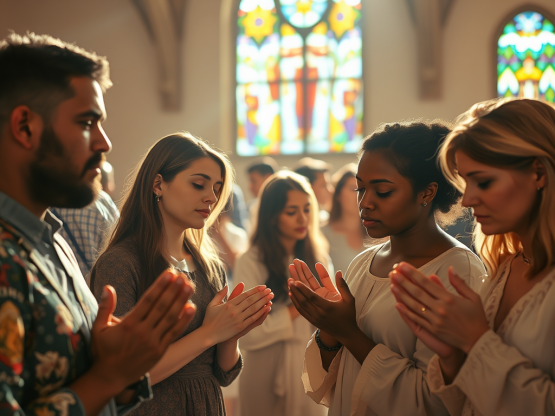
Have you ever paused to think about the words repentance, revival, and reformation? If you break each word down, you’ll notice a common thread: they all share the prefix “re-.” This simple prefix holds profound meaning, especially when viewed through the lens of the Bible. It signifies going back, doing again, or restoring something to its original state. Let’s explore how these three words, rich with spiritual depth, can guide us toward personal and collective transformation.
Repentance: Turning Back
The journey begins with repentance, a word that means to turn around or change direction. In the Bible, repentance is more than just feeling sorry for wrongs committed—it’s an active decision to turn back to God. The prefix “re-” here suggests a return to alignment with divine will, a rediscovery of the path we may have strayed from.
Repentance is often described as the first step in our spiritual journey because it clears the clutter in our hearts and makes room for growth. It’s about acknowledging where we’ve gone wrong and seeking to restore our relationship with God and with others. As the prophet Joel implores in Joel 2:13, “Return to the Lord your God, for He is gracious and merciful.”
Revival: Breathing Life Again
Once we’ve turned back through repentance, we step into revival—a word that literally means to bring back to life. Revival is about rekindling the fire in our souls, awakening our faith, and rediscovering the joy of communion with God. The prefix “re-” again signals a movement back to something we once had but may have forgotten or lost.
In the Bible, revival often comes when people collectively return to God, seeking Him with sincerity and humility. One of the most beautiful images of revival is found in Ezekiel 37, where a valley of dry bones comes back to life through the breath of God. Revival reminds us that no matter how lifeless or distant we may feel, God can breathe new life into us.
Reformation: Transforming Anew
The final step in this trio is reformation, which means reshaping or restoring something to a better state. While repentance addresses the heart and revival reignites the spirit, reformation transforms the way we live. It’s about realigning our actions, habits, and systems with God’s design.
The prefix “re-” here emphasizes the idea of continuous improvement, a return to a higher standard. The Protestant Reformation of the 16th century is a powerful historical example, but personal reformation is just as critical. As Romans 12:2 reminds us, “Do not be conformed to this world, but be transformed by the renewal of your mind.”
Why the “Re-” Matters
The prefix “re-” is a small yet powerful reminder that the Christian journey is one of restoration. It points us back to God’s original design for us—a life of purpose, peace, and connection with Him. Whether it’s repentance, revival, or reformation, each “re-” invites us to return, rebuild, and renew.
So, the next time you stumble across these words in Scripture or hear them in a sermon, think about the prefix. It’s not just a linguistic detail; it’s a beacon of hope. We’re not stuck where we are. With God, there’s always a way to go back, to rebuild, and to move forward stronger than ever.
In your own life, what does “re-” mean for you today? Is it time to turn back, seek new life, or reshape your path? The beauty of God’s work is that the answer can be all three, all at once.
 afrancinegreen.com