
Understanding a Defining Moment in African and World History—In Plain Language
“From one man, he made all the nations. They should inhabit the whole earth. He marked out their appointed times in history and the boundaries of their lands.” (Acts 17:26)
Some events in history stand out as turning points. They impact not just a single country, but entire continents and even the whole world. One such event is the Scramble for Africa. This period reshaped the map of Africa, changed the lives of millions, and still affects our world today.
What Does Acts 17:26 Have to Do With Africa?
Before diving into the history, it’s worth reflecting on a profound Scripture from the Bible—Acts 17:26. This verse, spoken by Paul in ancient Athens, reminds us that all people come from a common origin. In God’s eyes, humanity is one family, meant to share the earth. Yet, throughout history, the boundaries that divide us—whether drawn by nature or by human hands—have sometimes led to conflict. They have also led to misunderstanding and loss. The Scramble for Africa is a powerful example of how lines drawn on a map can change lives for generations. This highlights the need to remember our shared humanity.
What Was the Scramble for Africa?
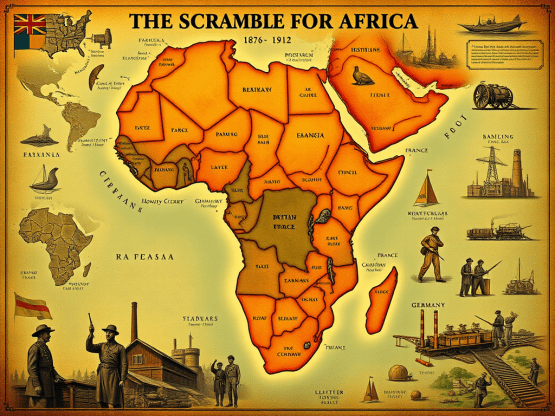
The name makes it sound playful—like a race or a game. But the Scramble for Africa was anything but fun. In the late 1800s and early 1900s, European countries rushed. They aimed to take control of as much African land as they could. Within just a few decades, outsiders claimed and ruled almost the entire continent. The main countries involved were Britain, France, Belgium, Germany, Portugal, and Italy. All this happened with barely any say from African people themselves.
Before this era, Africa was home to hundreds of different kingdoms and societies. These groups had their own ways of life, languages, and traditions. Many handled their own affairs, traded with each other, and lived in relative independence. The Scramble for Africa changed all that. It broke up traditional communities and redrew the map. Sometimes, these changes still cause problems today.
Why Did European Powers Want Africa?
To understand why the Scramble happened, we need to look at what was happening in Europe at the time. Several factors came together to make Africa suddenly very attractive to European countries:
- Raw Materials: The Industrial Revolution was in full swing. European factories needed more and more resources. These included rubber, gold, diamonds, copper, and other minerals. Africa had plenty of these, and Europeans wanted access to them.
- Prestige and Power: European countries were in constant competition to be seen as the strongest and most important. Having lots of colonies made a country look powerful—like having the biggest collection of trophies.
- New Markets: By controlling more land, Europeans could sell their goods to more people and make more profit. Colonies were both sources of resources and potential customers for finished products.
- Missionary Work: Many Europeans, especially Christian missionaries, believed it was their duty to share their religion and way of life. They wanted to spread Christianity and “civilize” people, as they saw it, in places like Africa.
- Political Instability: Some African kingdoms were already facing tough times. Old empires, like the Ottoman Empire, were weakening. This made it easier for European powers to step in and take control.
The Berlin Conference: When the Map Was Redrawn
As more European countries became interested in Africa, conflicts seemed likely. There was a real risk of war among them over who would get what. To avoid this, Germany’s leader Otto von Bismarck hosted the Berlin Conference in 1884–1885. Representatives from fourteen countries gathered in Berlin, Germany. No African leaders were invited.
Instead, the European powers sat around a table and decided how to carve up Africa for themselves. They drew borders on a map, often ignoring the people who actually lived there—their cultures, languages, and rivalries. They agreed that if a country claimed a piece of land, it had to actually control it. It was not enough to just say it belonged to them. This rule led to a mad scramble to send out explorers, soldiers, and government officials to stake their claims.
Who Got Which Parts?
Here’s a quick look at the main European powers and the regions they controlled:
- Britain: Took control of Egypt, Sudan, Kenya, Uganda, Nigeria, South Africa, and more. The Suez Canal in Egypt was especially valuable because it made trade with India much faster.
- France: Focused mostly on West and North Africa, taking over places like Algeria, Senegal, and Mali (then called French Sudan).
- Belgium: King Leopold II personally controlled the Congo Free State. His rule was so brutal—marked by forced labor and violence—that it shocked even other Europeans.
- Germany: Managed to claim colonies like German East Africa (now Tanzania), Cameroon, and Namibia, despite joining the game late.
- Portugal: Held onto its old colonies like Angola and Mozambique.
- Italy and Spain: Took smaller regions, such as Libya (Italy) and Equatorial Guinea (Spain).
What Did This Mean for Africans?
The impact on Africans was huge and mostly negative. Here’s what happened:
- New Borders: The lines drawn by Europeans split families and tribes apart, forcing rival groups to live together. Many of Africa’s ongoing conflicts come from these artificial borders.
- Loss of Independence: African kingdoms and societies lost control over their own affairs. Europeans made the laws, controlled resources, and decided how people lived and worked.
- Resource Extraction: European countries took Africa’s natural resources to fuel their own industries. Wealth was shipped out of Africa, leaving local economies underdeveloped.
- Forced Labor: Many Africans had to work on plantations, in mines, or on big building projects, often for little or no pay. Punishment for resisting was usually harsh and violent.
- Imposed Culture and Education: Europeans tried to erase African traditions, languages, and religions. Schools taught European ways, often dismissing or banning African customs.
- Dismantled Local Leadership: Traditional leaders lost power or were pushed aside in favor of European-appointed officials.
Did Africans Resist?
Absolutely. Africans did not simply accept colonization. Across the continent, people fought back—sometimes in open revolts and battles, other times by refusing to cooperate in everyday life. These acts of resistance didn’t always succeed initially. Nevertheless, they planted the seeds for national pride. These efforts led to the independence movements that swept Africa in the 1900s.
What’s the Legacy Today?
The effects of the Scramble for Africa remain visible. Most of the borders we see on today’s map of Africa are the same ones drawn at the Berlin Conference. These borders can still cause tension, as they cut across communities and languages. Many African nations are still working to overcome challenges from decades of colonial rule. In some places, these challenges persist even after more than a century of colonial influence.
While colonization did bring some benefits—like railways, new crops, and roads—the negatives were far greater. European needs determined the setup of many African economies. This situation made it hard for them to develop on their own after independence. The trauma and disruption from that era are still being overcome.
Understanding the Scramble for Africa helps us make sense of Africa’s diversity. This diversity is evident in both languages and cultures. It also explains why some conflicts continue today. It reveals why certain countries stay rich, while others struggle. It emphasizes the importance of making decisions that respect everyone’s dignity.
Why Does the Scramble for Africa Matter Now?
History isn’t just about the past—it’s about how we live today, and the choices we make for the future. The Scramble for Africa is a powerful reminder of how decisions made in faraway places can shape lives for generations. It also teaches us to value our shared humanity, as Acts 17:26 encourages. By recognizing the mistakes of the past, we can work toward a fairer world. We aim for a more respectful world where every nation and community has a voice.
In short, the Scramble for Africa marked a period when European countries hurried to divide the African continent. They aimed to control it for their own gain. Its story teaches the importance of listening and respecting boundaries. It also reminds us that we’re all part of one human family, sharing hopes and dreams. Together, we have a future to build.
Minister A Francine Green
 afrancinegreen.com