
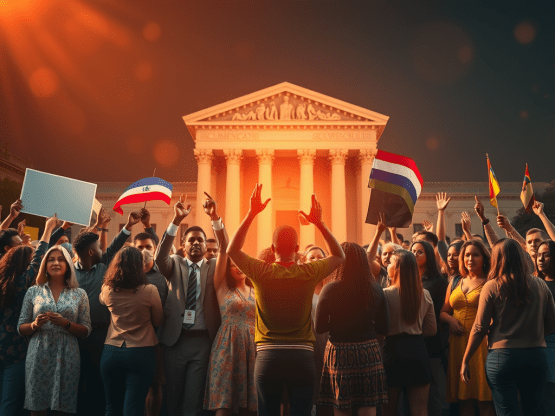
A Reflection on Politics, Religion, and Racism
Introduction
There are moments in history when the spirit of a nation seems to falter, when the ideals its people cherish appear to recede behind the cacophony of discord. America, a land long celebrated for its promise of liberty and opportunity, now finds itself beset by crises that strike at the very core of its identity. The currents of political division, religious strife, and persistent racism swirl together, casting shadows on the nation’s hopes for unity and progress. In contemplating the present, it becomes difficult to discern any glory in the tumult that shapes daily American life.
Political Polarization: The Fraying Fabric
America’s political landscape has grown increasingly polarized, with partisanship reaching levels that undermine civil discourse and effective governance. The country is split not only between parties but within communities, families, and even individuals’ hearts. The idea of the “loyal opposition”—vital to any healthy democracy—has, in many cases, been supplanted by suspicion, resentment, and outright hostility.
Roots and Consequences of Division
This state of affairs did not arise overnight. Decades of growing ideological divide have been fueled by changing media landscapes, the rise of social media echo chambers, gerrymandered districts, and the demonization of political opponents. Politicians and pundits alike stoke these divisions, often prioritizing power over principle. This polarization diminishes the ability of elected officials to collaborate on solutions for pressing issues such as healthcare, climate change, education, and economic inequality.
Loss of Common Purpose
The erosion of trust in institutions and one another is perhaps the most troubling aspect. Where once there was a sense of common purpose—a belief that, despite disagreements, Americans could work together for the greater good—there is now cynicism and fatigue. The very notion of compromise is greeted with suspicion, and those who reach across the aisle risk alienation from their own supporters. The public sphere, which should be a place for idea exchange and progress, instead becomes a battleground.
Religion: From Source of Unity to Line of Division
Religion has long played a major role in the American narrative, serving as both a wellspring of moral guidance and a source of community. Yet today, religion is often harnessed as a political tool or a marker of division, rather than a bridge toward empathy and understanding.
Faith and Political Agenda
In many circles, religious identity has become intertwined with political affiliation, with faith groups aligning themselves with parties and policies. This merger has, at times, led to exclusionary rhetoric and policies that marginalize those of differing beliefs or those who do not profess any faith. Rather than providing comfort and inspiration, religious differences are weaponized, fueling cultural battles and justifying discrimination.
Exclusion and the Erosion of Empathy
Religious institutions that once served as safe harbors for the downtrodden and the lost now risk becoming bastions of narrow orthodoxy. When religious leaders and communities turn away from the universal values of love, mercy, and justice in favor of rigid dogma or political expediency, the consequences are far-reaching. Empathy withers, and the social fabric frays.
The Search for Meaning Amidst Discord
Amid these tensions, many Americans continue to seek meaning and transcendence. Interfaith dialogues, grassroots community organizations, and acts of service persist across the nation. In these pockets of hope, the spirit of religion endures, reminding us of its potential to unite rather than divide.
Racism: The Lingering Shadow
Perhaps no issue so starkly reveals the absence of glory in contemporary American life as the persistence of racism. Though progress has been made since the days of segregation and open discrimination, the problem remains deeply embedded in institutions and everyday interactions.
Structural Racism and Its Impact
The legacy of slavery, segregation, redlining, and unequal access to education and employment continues to shape outcomes for millions of Americans. People of color face disparities in healthcare, policing, housing, and the justice system. The protests and movements that have arisen in recent years—sparked by acts of violence and injustice—reflect not only ongoing pain but the unyielding demand for change.
The Struggle for Justice and Recognition
Grassroots organizations, activists, and everyday citizens have worked to confront and dismantle systemic racism, often at great personal cost. Yet, these efforts are met with resistance, denial, and sometimes outright hostility. Political leaders debate the reality of racism, some minimizing its existence while others use it as a cudgel to further divide.
The Need for Honest Reckoning
A fundamental challenge lies in America’s reluctance to truly reckon with its past. Education systems often fall short in teaching the full history of racism and its consequences. Without honest acknowledgment, reconciliation remains elusive. The cycle of outrage and inaction perpetuates resentment and hopelessness.
The Absence of Glory: Why It Matters
Glory is not found in division, exclusion, or injustice. It is forged in the crucible of collective effort, in the recognition of shared humanity, and in the courage to confront difficult truths. The stories that shape America’s past—of emancipation, civil rights, and the pursuit of equality—are not tales of easy triumph but of struggle, sacrifice, and solidarity.
When Nations Lose Their Way
In those moments when the national discourse is dominated by animosity, when the voices demanding change are drowned out by indifference or scorn, the sense of glory fades. It is replaced by a pervasive unease, a questioning of whether the promise of America can still be realized.
Responsibility of Each Generation
Each generation inherits the wounds and the hopes of those who came before. The work of healing, of bridging divides, and of rooting out injustice is never finished. It demands honesty, empathy, and the willingness to listen. In the absence of such efforts, there is no glory—only the stasis of a nation at war with itself.
Paths Forward: Rekindling Hope
Though the present is marked by difficulty, history teaches that change is possible. The American story is not only one of failure but of renewal. Across the country, individuals and organizations strive to repair what is broken, to foster dialogue, and to imagine a future where dignity and respect are extended to all.
Building Bridges
Efforts to bridge political divides, cultivate interfaith understanding, and confront racism are underway, often far from the headlines. These acts may seem small, but they are the seeds from which renewal grows.
Restoring Civic Life
Revitalizing civic life requires investing in education, encouraging community engagement, and nurturing the public spaces where honest conversation can occur. It means supporting leaders who prioritize the common good over personal gain.
Centering Human Dignity
The heart of any meaningful progress lies in affirming the dignity of every person, regardless of background, belief, or skin color. This is the challenge and opportunity that faces America today.
Conclusion
The current climate in America reveals the absence of glory in many facets of national life. Political polarization, religious division, and the persistence of racism cast long shadows. Yet, the story is not over. Within the struggle lies the potential for change, for the rekindling of hope, and for the restoration of the ideals that once inspired a nation.
The path ahead will not be easy. It will require courage, humility, and honesty. But if America is to reclaim any measure of glory, it must begin with the recognition of what has been lost—and a determination to repair and renew. Only then can the country move forward, not in denial of its hardships, but in pursuit of its truest promise: liberty and justice for all.
Minister A Francine Green
September 2025
 afrancinegreen.com