
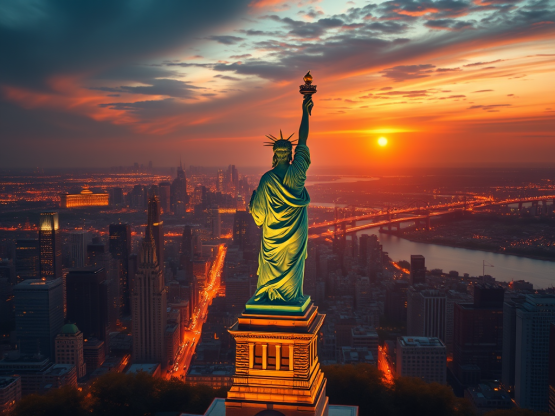
An Honest Look at the Challenges Facing the United States Today
The evocative phrase “city upon a hill” traces its origins to 1630, when Puritan leader John Winthrop employed it to articulate his aspirational vision for the Massachusetts Bay Colony. Over the centuries, this metaphor was embraced and transformed by notable American figures—most memorably Ronald Reagan—who cast the United States as a luminous beacon, guiding and inspiring the world with its example.
There once existed an era when “city on a hill” seemed a fitting emblem for America: a nation revered by others, admired for its spirit of freedom, boundless opportunity, and sense of unity. It was a land where possibility reigned, welcoming people of all backgrounds, fostering dreams, and rewarding those who dared to strive. America stood as a symbol of clear and unwavering ideals—liberty, justice, and the enduring hope for a brighter tomorrow.
But in recent years, that image has changed. More and more, people are asking if America is still that shining example to the world. The sense of togetherness and shared purpose seems to be fading. Instead, the country is increasingly marked by division, distrust, and confusion about what it even means to be American.
What Changed? A Broken Spirit
America used to offer a promise to anyone who came here: if you worked hard, you could build a better life. The country’s founding principles—like life, liberty, and the pursuit of happiness—were supposed to apply to everyone. These ideas united generations and gave people a sense of belonging.
Now, though, those promises seem uncertain. Many people feel like the system is broken, that the “American Dream” isn’t really within reach anymore. It’s not just about government or politics; it’s about the feeling deep down that the country isn’t working together as it once did. Where there used to be trust in each other and the future, now there’s skepticism and disappointment.
Splintered Identity: Who Are We?
One reason for this is that Americans don’t see themselves as one people anymore. Instead of focusing on what connects everyone, there’s been a rise in dividing into groups based on beliefs, background, or interests. This is sometimes called “identity politics,” where people see themselves first as part of a certain group rather than as Americans.
It’s not just about race or religion—it’s about politics, class, where you live, and even what you do for work. These divisions mean Americans aren’t pulling together to solve problems; they’re often arguing and fighting instead. Social media, with its endless arguments and echo chambers, has made it easier for people to shut themselves off from different ideas.
Without a common story or belief in what America stands for, it’s hard for people to feel united. When everyone has their own version of the truth, there’s nothing to bind the country together. That’s why the nation feels so fractured today.
Loss of Greatness: What Happened to American Pride?
For much of its history, America was known as the greatest nation on Earth. It wasn’t just about wealth or power—it was about being a model for others. American inventions, culture, and ideas had a big impact all over the world. Other countries respected America as a responsible leader, not just in politics but in standing up for what was right.
But now, America’s influence has changed. Instead of being admired or trusted, sometimes the country is seen as arrogant or self-absorbed. People abroad often question American decisions, and the disagreements at home are easy to see from far away. The world’s view of America now reflects the deep divides within the country itself.
Even at home, Americans argue about what “greatness” means. Is it about having the strongest military? The biggest economy? The best opportunities for everyone? There’s no longer a common answer—just more disagreement.
Rising Divisions: Inside America’s Splintered Society
It isn’t just politics causing problems—there are real differences in how people live. The gap between rich and poor keeps getting wider, and people in cities often don’t see eye to eye with those in rural areas. These divides show up in voting patterns, media choices, and even in what people care about day to day.
Families feel this divide, too. Arguments about politics have strained relationships between relatives and friends. Instead of coming together over shared values, people sometimes keep their opinions to themselves, worried about causing a fight. It’s as if the country’s polarization has seeped into every part of life.
Patriotism, or love for country, isn’t what it used to be. Younger Americans are especially skeptical, sometimes confusing patriotism with nationalism or prejudice. Many have never learned what it means to love a country without ignoring its problems—how you can care about your nation and want to improve it, not just accept everything as it is.
In some places, the idea of being proud to be American is fading fast. Without that sense of belonging, there’s a vacuum where purpose and connection used to be.
Civil Religion: Losing Faith in Shared Values
Historically, religion—whether faith in God or in a set of shared ideals—has helped people cope with tough times and come together. America has always had something called “civil religion,” which means a belief in the country’s common values and democratic principles. These helped people see themselves as part of something bigger.
But even this sense of unity is disappearing. Cynicism and distrust have replaced faith in America’s ideals. People are more likely to see national symbols or traditions as empty gestures than meaningful ways to connect. The glue that once held the nation together seems to be drying up.
When there’s no faith in the country’s ability to solve problems or in its basic principles, it’s much harder to find common ground. Instead of hope, people feel frustration and uncertainty.
America at a Crossroads: Where Do We Go from Here?
As the famous scientist Albert Einstein said, “The last thing to collapse is the surface.” Outwardly, America still looks like the superpower it’s always been. But beneath that surface, the cracks are obvious to anyone who looks closely. The country is facing a big choice: keep going down the path of division and decline, or try to rediscover what made it special in the first place.
Rebuilding unity won’t be easy. It means facing uncomfortable truths about how divided the country is and learning to respect differences. Americans don’t have to agree on everything—but the nation needs to find a way to bring people together around common values like respect, dignity, and purpose.
That doesn’t mean erasing differences or ignoring problems. It means embracing diversity and disagreement, but within a framework that allows for cooperation and progress. It means remembering that America was built on the idea that people from all walks of life could work together toward something better.
Conclusion: Finding Unity Again
America’s days as the “city on a hill” aren’t necessarily over—but they won’t return on their own. The country needs to rediscover what it means to be a community, where differences aren’t just tolerated but accepted as part of what makes the nation strong.
Real unity doesn’t come from pretending that problems don’t exist or forcing everyone to think alike. It comes from open conversation, respect for each other’s views, and a shared commitment to improving life for everyone. It comes from remembering the ideals that helped America shine in the first place—and working together to revive them.
America’s future depends not on a single leader or policy, but on each citizen’s willingness to come together and rebuild trust. If the country can do that, it just might become a beacon for the world once again.
Minister A Francine Green
September 2025
 afrancinegreen.com