
Connecting a Powerful Bible Story to Everyday Faith
Have you ever wondered why Jesus, who is known for His love and gentleness, marched into the Temple and started flipping tables? This dramatic event, known as the Cleansing of the Temple, is one of those Bible stories that sticks with you. But what actually happened, and why does it matter for us and our churches today?
The Temple’s Purpose: A Welcoming Place to Meet God
Back in Jesus’ day, the Temple in Jerusalem was the heart of spiritual life. It was supposed to be a holy place where people from all nations could come and connect with God. Think of it like a community center for worship, prayer, and finding hope—a place everyone could feel welcome.
Corruption and Exploitation: When Business Took Over Worship
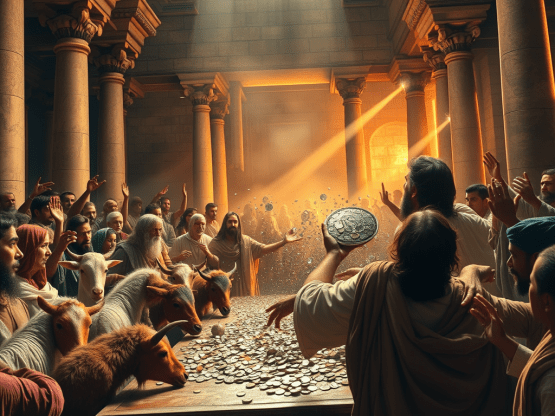
But by the time Jesus arrived, things had changed. The Temple courts were filled with merchants selling animals for sacrifices and money changers exchanging currency. What started as a helpful service for travelers had turned into a noisy marketplace. Worse, some sellers were charging unfair prices, taking advantage of people who came to worship. The focus had shifted from honoring God to making a profit.
Jesus’ Response: Righteous Anger and Bold Action
Jesus wasn’t having any of it. With a heart full of passion for God’s house, He overturned the tables, scattered the coins, and drove out the merchants. His actions were loud and clear: worship isn’t for sale, and God’s house isn’t a place for exploitation. Jesus’ anger wasn’t about losing His temper—it was about standing up for what was right and protecting the sacredness of worship.
Why It Mattered: Justice, Pure Worship, and Spiritual Renewal
This bold move sent a powerful message. Jesus wanted everyone to see that worship should be pure, honest, and focused on God—not distracted by money or selfish gain. He showed that spiritual spaces should be safe and welcoming, not places where people feel used or excluded. In short, Jesus stood up for justice and called everyone back to the heart of faith.
Lessons for Today: Keeping Our Worship and Hearts Pure
So what does this mean for us? The story isn’t just about ancient history—it’s a wake-up call for today’s church and believers. It reminds us to keep our focus on God and not let money, traditions, or distractions take center stage. It challenges us to make our churches places of welcome, not barriers, and to check our own hearts for anything that gets in the way of true worship. When we see injustice or exploitation, even in subtle forms, Jesus’ example encourages us to speak up and make things right.
Conclusion: Bringing It Home
The Cleansing of the Temple is more than just a dramatic scene—it’s a call to action. Let’s ask ourselves: are we keeping our worship pure and our hearts open to God? Are our churches places where everyone feels valued and safe? Jesus’ boldness challenges us to reflect, make changes where needed, and keep our faith real and alive. As we do, we’ll honor God and show the world what true worship is all about.
Minister A Francine Green
October 2025
 afrancinegreen.com