
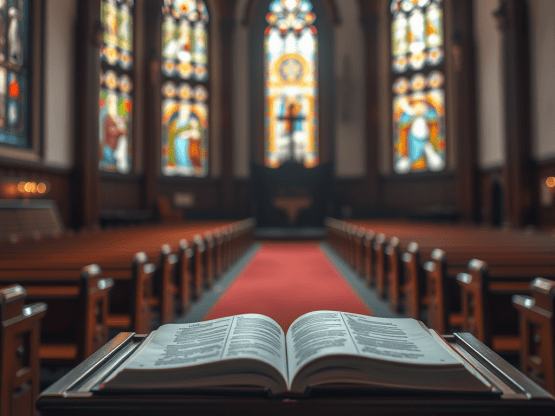
Exploring the Impact of Political Agendas in Sacred Spaces
Introduction
The phrase “house of the Lord” evokes a sense of sacredness, reverence, and unity. In scripture, it refers not only to physical places of worship like the Temple in Jerusalem but also to the spiritual dwelling of God’s presence within believers and the Church. Verses such as Psalm 122:1 celebrate the joy of gathering in the Lord’s house, while passages like 1 Peter 2:5 and Ephesians 2:19-22 expand the concept to include the spiritual community of believers. Yet, what happens when politics—divisive by nature—enters this sacred space?
Physical Place of Worship
When considering the physical house of the Lord, such as the temple described in Psalm 122:1 and 2 Chronicles 3:1, we see an emphasis on unity, joy, and devotion. The temple was a place where people set aside their differences to worship God together. The introduction of political agendas can disrupt this unity, turning the house of prayer into a battleground for competing ideologies. The focus shifts from worship and fellowship to debates and divisions, often causing strife among congregants who may hold differing views. The joy and peace described in Psalm 122:1 can be overshadowed by discord when politics takes center stage.
Spiritual Dwellings
Scripture also teaches that believers themselves are temples of God’s Spirit (1 Corinthians 6:19; 1 Corinthians 3:16-17). As “living stones” (1 Peter 2:4-5), Christians are built together into a spiritual house. When political beliefs become the defining feature of this spiritual community, the foundation of love, grace, and mutual respect can erode. Ephesians 2:19-22 reminds us that believers are “members of the household of God,” united not by political affiliation but by faith in Christ. Bringing politics into this spiritual house risks fracturing the unity that Christ prayed for among His followers.
Dwelling in God’s Presence
Passages like Psalm 27:4 and Psalm 23:6 express the longing to dwell in the house of the Lord, to experience His beauty and goodness. This dwelling is characterized by peace, worship, and communion with God. When political agendas dominate conversations and priorities within the church, the focus can shift away from seeking God’s presence. Instead of gazing upon the beauty of the Lord, believers may find themselves caught up in worldly concerns, missing the opportunity to experience the fullness of God’s love and grace.
The Consequences of Political Division
Bringing politics into the house of the Lord can have several consequences:
· Division Among Believers: Political debates can create rifts, making it difficult for members to maintain unity and love.
· Distraction from Worship: The central purpose of worship—glorifying God—can be overshadowed by political agendas.
· Loss of Witness: The church’s message of hope and reconciliation may be compromised when it is seen as a platform for political activism rather than spiritual transformation.
· Spiritual Erosion: The emphasis on temporal matters can weaken believers’ spiritual focus and growth.
Restoring Sacredness
To preserve the sanctity of the house of the Lord, believers are called to prioritize God’s kingdom above earthly politics. This means fostering an environment where love, humility, and grace abound—where differences are navigated with respect and the focus remains on Christ. Returning to the heart of worship, as described in Psalm 27:4, allows the church to be a place of refuge and unity, rather than division and strife.
Conclusion
The house of the Lord—whether a physical building or a spiritual community—is meant to be a place of peace, worship, and fellowship in God’s presence. When politics enters this sacred space, it threatens to undermine the unity and purpose for which it was created. By keeping the focus on Christ and His teachings, believers can ensure that the house of the Lord remains a sanctuary for all, regardless of political persuasion.
Minister A Francine Green
October 2025
 afrancinegreen.com