
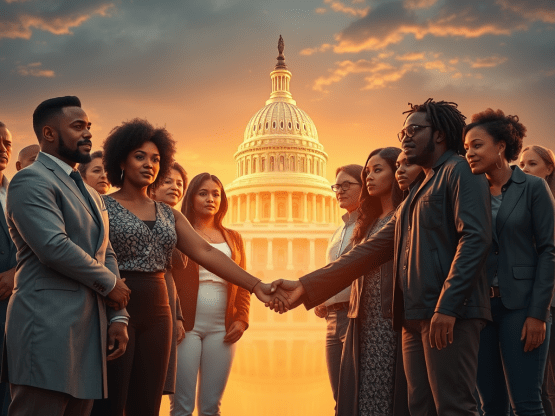
Why Finding Common Ground Matters More Than Ever
Introduction: Pascal’s Quote and Its Relevance Today
Blaise Pascal, a French philosopher and mathematician from the 17th century, once said, “Men never do evil so completely and cheerfully as when they do it from religious conviction.” In layman’s terms, he was warning us that when people believe they are acting in the name of religion, they can sometimes commit harmful acts with even more passion and certainty. This idea is still relevant today, especially in America, where religion and politics are deeply connected and often a source of division.
Religion in American Politics: Recent History and Polarization
Religion has always had a role in shaping American values and politics. Over the past few decades, faith has become a central issue in presidential campaigns. Starting in the late 20th century, candidates began to openly discuss their religious beliefs, hoping to connect with voters who share their faith. This trend hasn’t just brought religion into the conversation—it’s made it a dividing line, with some candidates seen as champions of religious values and others viewed as defenders of secularism.
The Two Sides: Religious Conservatives vs. Secularists
Today, American society is often split between religious conservatives and secularists. Religious conservatives believe that faith should guide not just personal choices but also public policy. They support things like prayer in schools, restrictions on abortion, and laws that reflect their moral beliefs. On the other hand, secularists argue that government should stay neutral on matters of religion, protecting everyone’s freedom to believe or not believe as they choose. This tug-of-war often leads to heated debates and growing divides within both the church and the wider society.
Media and Public Perception: Examples from Recent Elections
The media plays a big role in highlighting these divisions. In recent elections, news outlets have focused on candidates’ religious backgrounds, their church attendance, and where they stand on “values” issues. Sometimes, coverage paints religious voters as out of touch or secular voters as hostile to faith. This can make it seem like Americans must pick a side, fueling further polarization and misunderstanding.
The Dangers of Extremes: Why Polarization Hurts Democracy
When people take extreme positions—whether it’s insisting that religion should control every aspect of public life or demanding that it be completely removed from government—it can hurt democracy. Extreme views often lead to anger and mistrust, making it harder for people to work together. Pascal’s quote reminds us that certainty in one’s beliefs, especially when tied to religion, can sometimes blind us to the harm we might cause others. Both religious conservatives and secularists risk losing sight of what’s best for everyone when they stick too tightly to their own side.
Historical Perspective: Religion’s Role in Society and Government
Historically, religion has helped shape American society for the better. Faith communities have led movements for justice, like the abolition of slavery and the fight for civil rights. At the same time, the U.S. Constitution protects freedom of religion and separation of church and state. This balance has allowed people of many beliefs to live together peacefully. When religion and government each respect their boundaries, society flourishes.
The Need for Balance: Civic and Religious Structures
What’s needed today is a balanced approach. Religion can inspire people to do good and bring communities together. Civic structures, like the law and government, protect everyone’s rights and ensure fairness. Neither should dominate the other. By respecting both, we can avoid the dangers Pascal warned about—acting “cheerfully” in ways that hurt others. Instead, we can build a society where faith and freedom go hand in hand.
Conclusion: Finding Common Ground and Moving Forward
Pascal’s words challenge us to think carefully about how we let our beliefs influence our actions, especially in politics. As Americans, we need to recognize the value of both religious and secular perspectives. Listening to one another, seeking compromise, and respecting differences is the only way forward. By finding common ground, we can move beyond polarization and create a society that honors both faith and freedom.
Minister A Francine Green
November 2025
 afrancinegreen.com