
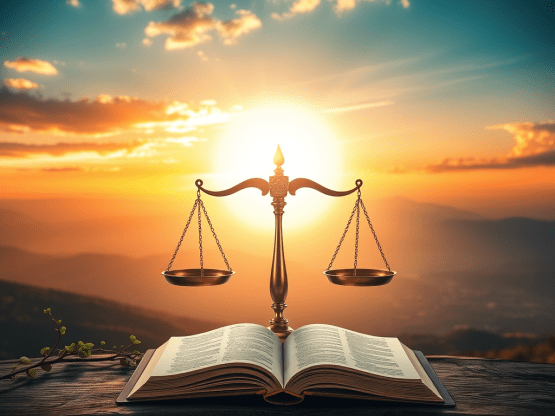
A Plain-Spoken Look at Faith’s Call for Fairness—and America’s Voting Rights Challenge
God’s Call for Justice, In Simple Terms
If you look at the world’s biggest religions, one thing stands out: God doesn’t just want people to go through the motions of religion; God wants us to live out real justice. That means being honest and fair, showing compassion, and standing up for those who are vulnerable—like the poor, widows, orphans, and outsiders. It’s not about fancy ceremonies; it’s about making sure our daily actions reflect true goodness.
This idea runs through the teachings of many faiths. For example, biblical prophets like Amos and Zechariah didn’t just talk about religious rituals—they called people to change how they treated others and to make fair decisions. In Hinduism, the idea of karma says that when you act rightly, you’re rewarded, but if you act wrongly, you face the consequences. Justice, then, is both cosmic and personal.
· Doing What’s Right: God wants us to be fair and honest every day, not just at religious events.
· Helping the Vulnerable: Protecting those who can’t protect themselves is at the heart of justice.
· Real Judgment: Decisions should be fair—showing mercy and kindness, and not influenced by selfish gain.
· Righteousness and Mercy: True justice is doing what’s right while also being compassionate, like an endless stream of goodness.
· Balance and Consequences: In Hindu beliefs, cosmic justice means deeds matter; every action has a reaction.
· Facing Consequences: When people ignore justice, faith traditions warn that negative consequences will follow.
At bottom, God asks us to build a world where fairness wins, the weak are supported, and every interaction is shaped by mercy and kindness.
Justice in Today’s World: Voting Rights and Fairness
Recently, the United States marked 60 years since the Voting Rights Act—a law meant to ensure everyone can vote freely and fairly. But the law isn’t as strong as it used to be, and new court decisions could make it weaker. If that happens, state-level laws and constitutions might have to step up, but these are patchy substitutes for solid national protections. Some states do better than others, and even then, local solutions aren’t perfect.
For instance, past Supreme Court cases have already made it harder for some voters, especially in places with a history of discrimination. Upcoming cases could limit who can stand up for voters’ rights, making it so only the federal government can enforce protections—not regular people or organizations. States have tried to pass their own voting rights acts, but in many places, these aren’t enough, and the right to vote can still be threatened.
Some states offer extra protections, and citizens can sometimes push for better laws through ballot initiatives. But in places with poor records on voting rights, new protections are unlikely. Some courts even block race-conscious actions meant to help minority communities choose their representatives.
Even if federal protections shrink, state laws can help. Rules against gerrymandering, requirements to keep communities together in voting districts, and fair processes for drawing maps all make a difference. Still, a patchwork of state laws can’t replace a strong national standard that treats every voter equally.
The Bottom Line
Justice, in the eyes of God and according to most faiths, means more than just following religious customs—it’s about standing up for fairness, defending those in need, and living with mercy. And in our society, that includes protecting everyone’s right to vote. Without real justice—both in our hearts and in our laws—too many people get left behind. The call for justice is timeless, and it’s up to all of us to answer it.
Minister A Francine Green
December 2025
 afrancinegreen.com