
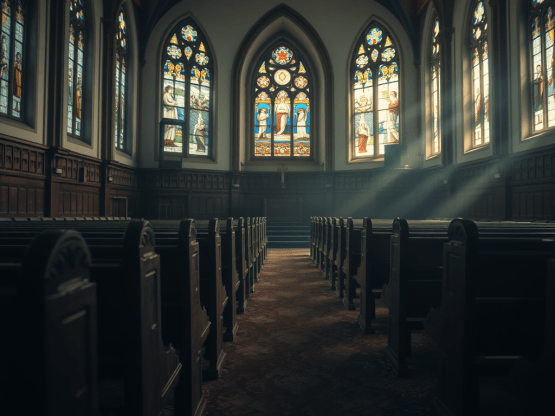
Understanding the Trends, Causes, and What the Future Might Hold
Introduction: A Major Shift in American Religious Life
In the United States, going to church was once a central part of many people’s lives. Today, however, fewer Americans are attending religious services or identifying with a church than ever before. This trend has reshaped communities and sparked conversations among religious leaders, sociologists, and everyday Americans. In this post, we’ll break down what’s happening, why it’s important, and what the future might look like for American churches.
Declining Membership and Attendance: The Numbers Tell the Story
Over the past few decades, the number of Americans who belong to a church or regularly attend services has dropped significantly. According to a 2023 Gallup poll, only about 50% of U.S. adults reported being a member of a church, synagogue, or mosque in 2020—a sharp decline from 70% in 1999. Weekly church attendance has also fallen, with just about 30% of adults saying they attend religious services every week, compared to around 40% two decades ago. These numbers point to a clear and steady downward trend in both membership and attendance.
The Rise of the ‘Nones’: More Americans Without a Religious Affiliation
One of the most striking changes is the growth of the “nones”—people who say they have no religious affiliation. According to the Pew Research Center, the share of Americans who identify as religiously unaffiliated grew from 16% in 2007 to 29% in 2021. This group includes atheists, agnostics, and those who simply say they are “nothing in particular.” The “nones” are now one of the largest segments of the American religious landscape.
Generational Shifts: Younger Americans Are Leading the Change
Much of the decline in church membership and attendance is being driven by younger generations. Millennials and members of Generation Z are far less likely to attend church or identify with a religious group than their parents or grandparents. For example, nearly half of Millennials (born 1981–1996) describe themselves as religiously unaffiliated. This generational change suggests that the trend may continue as these younger Americans become a larger part of the population.
Church Closures: Fewer Congregations, Especially in Mainline Denominations
The drop in attendance and membership has led to the closure of thousands of churches. Estimates vary, but some experts suggest that as many as 4,500 Protestant churches closed in the U.S. in 2019 alone, with closures accelerating during the COVID-19 pandemic. Many small congregations have struggled to keep their doors open, especially as donations have decreased.
Impact on Denominations: Who Is Most Affected?
The decline hasn’t affected all churches equally. Mainline Protestant denominations (like the United Methodist Church and the Presbyterian Church USA) have seen the steepest drops in membership. Catholic churches have also experienced declines, though often at a slower rate. Meanwhile, evangelical churches have fared somewhat better, but even these groups have seen recent declines in both membership and attendance. No group is immune to the broader trends changing American religious life.
Causes of Decline: Why Are Fewer People Going to Church?
Several factors have contributed to the decline in church participation:
· Cultural Shifts: Society has become more individualistic, and traditional religious practices are less central to daily life for many Americans.
· Disaffection and Scandals: High-profile scandals and a growing mistrust of institutions have led some to distance themselves from organized religion.
· Political Polarization: Some Americans feel that churches have become too involved in politics or have taken stances they disagree with, leading them to leave.
· Generational Change: Younger Americans are more likely to explore different spiritual paths or none at all.
· COVID-19 Pandemic: The pandemic disrupted in-person worship and accelerated trends that were already underway.
Recent Trends: Signs of Stabilization?
While the decline in church membership and attendance has been dramatic, there are signs that the trend may be slowing or stabilizing. Some recent studies suggest that the share of Americans attending church or identifying with a religious group has leveled off in the past few years. It remains to be seen whether this is a lasting change or a temporary pause, but it offers a glimmer of hope for those who value organized religion.
Conclusion: Looking Ahead
The decline of church attendance and membership in the United States is a significant cultural shift with broad implications. While the reasons for this change are complex, the trend seems driven by generational change, shifting values, and growing religious diversity. Whether the numbers will continue to fall, stabilize, or even rebound in the future remains an open question. What is certain is that the American religious landscape is changing—and churches will need to adapt if they want to continue playing a role in people’s lives.
Bibliography
· Gallup.com. “U.S. Church Membership Falls Below Majority for First Time.” (2021). [URL]
· Pew Research Center. “About Three-in-Ten U.S. Adults Are Now Religiously Unaffiliated.” (2021). [URL]/
· Associated Press. “U.S. Churches Confront Steep Membership Declines.” (2023). [URL]
· Hartford Institute for Religion Research. “2020 Faith Communities Today Survey.” (2021). [URL]/
· Pew Research Center. “Modeling the Future of Religion in America.” (2022). [URL]/
 afrancinegreen.com