
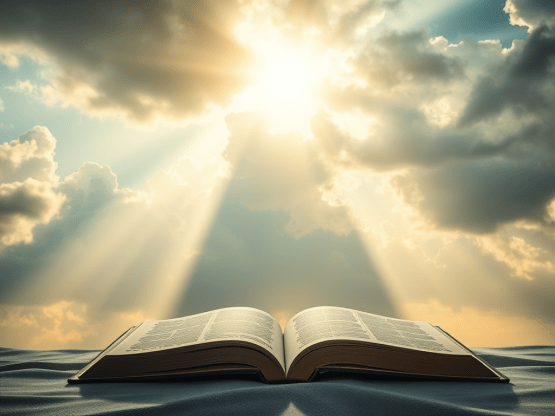
Why God’s Word is Central to Creation, Conviction, and Transformation
If you’ve ever wondered how God works in the world and in people’s hearts, the answer is simple and profound: God uses His Word. From the first pages of the Bible to the life of Jesus and beyond, God’s chosen instrument for creating, convicting, converting, and shaping His people has always been His Word. Let’s break down what this means in everyday language and see how it’s relevant to us today.
From the Beginning: God Speaks and Things Happen
The Bible opens with God speaking the universe into existence. But the story doesn’t stop there. Right after Adam and Eve sinned, God announced the first hint of the Gospel in Genesis 3:15—a promise that evil wouldn’t have the last word. Later, God called Abraham with a promise (Genesis 12:1-3), and He gave the Ten Commandments (Exodus 20) to show how His people should live. In all these moments, God’s Word wasn’t just information—it was active, giving life, direction, and hope.
God’s Word Brings Change and Renewal
Whenever God’s people lost their way, God sent His Word to bring them back. When King Josiah found the lost Book of the Law, it sparked a nationwide reform (2 Kings 22–23). During the time of Nehemiah and Ezra, reading and understanding God’s Word brought revival to a discouraged nation (Nehemiah 8–9). And in Ezekiel 37, God gave the prophet a vision of dry bones coming to life—symbolizing how His Word, empowered by the Spirit, can bring new life where there’s only death and hopelessness.
God’s Word Never Fails
God Himself says in Isaiah 55:10-11 that His Word is like rain that waters the earth—it always accomplishes what He wants. It never returns empty. Just as rain produces growth, God’s Word produces real results in people’s hearts and lives.
God’s Word in the New Testament
Jesus taught that we don’t live on bread alone, but on “every word that comes from the mouth of God” (Matthew 4:4). The Gospel of John begins with “In the beginning was the Word,” and tells us that Jesus Himself is God’s Word made human—bringing life, light, and truth (John 1:1, 4, 14).
Throughout the early church, God’s Word spread and changed lives. Acts 19:20 says, “The word of the Lord was growing mightily and prevailing.” Paul, in his letters, reminds Christians that the Gospel—the good news about Jesus—is “the power of God for salvation to everyone who believes” (Romans 1:16). God’s Word creates faith (Romans 10:17), works in believers (1 Thessalonians 2:13), and is “living and active . . . able to judge the thoughts and intentions of the heart” (Hebrews 4:12). It convicts us, gives us new birth (James 1:18; 1 Peter 1:23), and saves us.
Why This Matters for Us
There is nothing more powerful or life-changing than God’s Word. The Gospel—the message of Jesus’ life, death, and resurrection—is how God brings dead hearts and even dead churches back to life (see Ezekiel 37). God doesn’t have another way. If we want our churches and our lives to be healthy, holy, and alive, we need to focus on God’s revealed way of working: through His Word.
Programs vs. Preaching: What’s Most Important?
It’s easy to think that clever ideas, entertaining programs, or flashy presentations will build up the church. But the Bible shows us that what really matters is preaching and teaching God’s Word. When God’s Word is faithfully preached—explaining not just the words, but the meaning and purpose behind them—God’s power is unleashed among His people. Our efforts and innovations are nothing compared to what God’s Word can do.
Conclusion: The Word Builds the Church
If we want to see true change, growth, and renewal—in ourselves, our families, or our church—it starts with God’s Word. Let’s treasure it, listen to it, and share it. After all, God’s Word is His chosen way to work in the world, and there is no substitute for its life-changing power.
Minister A Francine Green
February 2026
 afrancinegreen.com