Category: Culture, Society

Letting Go of the Lesser Things to Know Christ

A Simple, Personal Reflection on Philippians 3:1-11 If I’m honest, there have been so many things in my life that I’ve held onto, thinking they made me a better person—my achievements, good deeds, and even my image in the eyes of others. They gave me a sense of security and pride. But when I look at the life of the…


No Longer a “City on a Hill: What’s Happened to America’s Sense of Unity? 

An Honest Look at the Challenges Facing the United States Today  The evocative phrase “city upon a hill” traces its origins to 1630, when Puritan leader John Winthrop employed it to articulate his aspirational vision for the Massachusetts Bay Colony. Over the centuries, this metaphor was embraced and transformed by notable American figures—most memorably Ronald Reagan—who cast the United States…

Nationalism: A Critical Examination

The Idolatrous Nature of Nationalism: Allegiance Elevated to Worship Nationalism has often been a cornerstone of political, cultural, and social discourse, shaping the identity and relationships of nations across centuries. At its core, nationalism involves the exaltation of a nation—or a particular conception of a nation—to the highest place of allegiance, concern, and devotion. This steadfast loyalty places the nation…

The Intersection of Race, Religion, and Politics: A Reflection on America’s Struggles

America’s history is one of profound ambition, resilience, and aspiration. Yet, woven into its narrative are recurring struggles with race, religion, and politics—forces that have simultaneously built, fractured, and reshaped the nation. These domains, essential to the fabric of society, hold the power to unite or divide, elevate or dismantle. This reflection examines how these factors, intertwined with human imperfection,…

Pursuing Justice: A Reflection on the Current State of American Politics, Race, and Religion

Grounded in the Wisdom of Psalm 89:14 Justice and righteousness are the twin pillars of any thriving society, the cornerstones of a nation’s moral and ethical framework. Psalm 89:14 beautifully encapsulates this truth: “Righteousness and justice are the foundation of your throne; steadfast love and faithfulness go before you.” These words serve as a profound reminder of the divine order…

Biblical Wisdom Against Toxic Rhetoric

The Power of Words: Addressing Racism, Toxic Rhetoric, and Violence Guidance from Biblical Wisdom Words possess an immense power to shape the world around us. They can heal or harm, inspire or destroy, unite or divide. In the face of modern challenges such as racism, toxic rhetoric, and the violence that often results from them, the wisdom of scripture provides…

The Dangers of Merging Faith and Politics

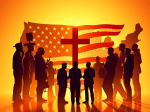
Understanding the divergence between faith-based values and political ideologies Christian Nationalism has emerged as an influential socio-political ideology, especially in the context of certain Western nations. It combines elements of religious identity, racial exclusivity, and nationalism, often advocating for policies that prioritize one ethnic and religious group over others. While its proponents may claim allegiance to Christ, the ideology itself…

How to Discern True Faith from Actions

How Jesus Teaches Us to Tell Good from Bad by Their “Fruits”  When you hear the phrase “strange fruit” in a biblical context, especially in Matthew 7:16-20 (KJV), it’s not talking about literal fruit like apples or oranges. Instead, it’s a metaphor—a way of using simple, everyday ideas to teach something deeper about people and their actions. In this passage,…

Reclaiming Authentic Christianity: “I Will Build My Church”

A Call to Return to the Heart of the Gospel What did Jesus mean when He said, “I will build my church” in Matthew 16:18? He was talking about a foundation of faith—a truth revealed to Peter about who Jesus really is: the Son of God. This isn’t just a story from the Bible, but a powerful reminder for today’s…